

We offer an intensive 3-month Data Science training program designed to develop strong analytical and technical expertise. The course takes participants through the full data science pipeline—from data collection, cleaning, and transformation to advanced analysis, visualization, and predictive modeling—using tools like Python and SQL. Learners gain hands-on experience through real-world projects that cover key areas such as statistical analysis, exploratory data analysis (EDA), machine learning, and applied artificial intelligence. Backed by expert mentorship and industry-relevant case studies, the program empowers students to make data-driven decisions and prepares them for dynamic careers in data science, AI, and analytics across diverse sectors.

01
Data science overview
Data science workflow and pipeline
Roles in data science
Data science vs analytics vs engineering
Types of data analysis
Business intelligence tools
Exploratory data analysis (EDA)
EDA using Python (Pandas, Seaborn, Plotly)
Common pitfalls in data analysis
02
Data cleaning and handling missing values
Outlier detection and treatment
Data type conversions and normalization
Feature creation and selection
Feature scaling (standardization, normalization, robust scaling)
Data encoding (one-hot, label, target)
Dimensionality reduction (PCA)
Dataset balancing (SMOTE, undersampling, oversampling)
Feature importance (correlation, information gain, SHAP, LIME)
03
Introduction and goals of AI
History and evolution of AI
Applications and case studies
Types of AI (narrow, general, super AI)
Subfields of AI (NLP, vision, robotics)
Machine learning vs deep learning
04
Types of data (structured, semi-structured, unstructured)
Data formats (CSV, JSON, XML, HDF5)
Data collection techniques
APIs, web scraping, and IoT data
Data quality and validation
Data governance, privacy, and ethics
05
Descriptive statistics (mean, median, mode, variance)
Data visualization and summarization
Inferential statistics and hypothesis testing
Probability theory and Bayes" theorem
Random variables and expected value
Probability distributions (normal, binomial, Poisson)
Central limit theorem and sampling
06
Python basics and syntax refresher
Working with NumPy arrays and linear algebra
SciPy for statistics and optimization
Pandas for data manipulation
Scikit-learn for modeling and pipelines
Jupyter and Google Colab environments
07
Data visualization principles
Matplotlib and Seaborn for static plots
Plotly and Dash for interactive visualization
Advanced plots (heatmaps, pair plots, violin plots)
08
Introduction to ML and workflow
Supervised learning (regression, classification)
Ensemble learning (bagging, boosting, stacking)
Tree-based models (decision trees, random forest, XGBoost)
Linear models (linear, logistic regression)
K-nearest neighbor (KNN)
Support vector machines (SVM)
Unsupervised learning (clustering, association rules)
Apriori Algorithm
Hierarchical and density-based clustering
Semi-supervised and reinforcement learning
Model persistence (Pickle, Joblib, ONNX)
09
Phases of model development
Data understanding and preparation
Model building and evaluation
Model validation and cross-validation
Deployment and maintenance
10
Classification metrics (accuracy, precision, recall, F1-score, ROC-AUC)
Regression metrics (MAE, MSE, RMSE, R²)
Clustering metrics
Evaluation Measures for Association (Support, Confidence, Lift)
Confusion matrix analysis
Cross-validation and bootstrapping
Bias–variance tradeoff
11
Introduction to neural networks
Biological inspiration and perceptrons
Feed-forward architecture
Activation functions and optimizers
Loss functions and gradient descent
Backpropagation and weight updates
Regularization (dropout, early stopping, batch normalization)
Callbacks and checkpoints
12
TensorFlow
Keras
PyTorch
OpenCV for computer vision
Integration with scikit-learn
13
Multilayer perceptron (MLP)
Convolutional neural network (CNN)
Recurrent neural network (RNN)
14
NLP basics and workflow
Text preprocessing (tokenization, stemming, lemmatization)
Stopword removal and normalization
Bag of words and TF-IDF
Word embeddings (Word2Vec, GloVe)
Transformer-based models (BERT, GPT overview)
Applications: sentiment analysis, summarization, chatbots
15
Sequence-to-sequence models
Recurrent architectures (LSTM, GRU)
Attention mechanism
Transformer model and self-attention
BERT and GPT architectures
16
Fairness and bias in machine learning
Interpretability vs explainability
Tools for explainable AI (LIME, SHAP, PDPs)
Ethical considerations in AI design
Responsible and transparent AI
17
Concept of transfer learning
Fine-tuning pre-trained models
Model compression and quantization
Regularization and dropout
Hyperparameter tuning (GridSearch, RandomSearch, Optuna)
Data augmentation and synthetic data generation
Trinity Technologies in Trivandrum offers a comprehensive Data Science training and certification program designed to equip learners with the knowledge and technical expertise needed to succeed in the modern, data-driven world. Suitable for both beginners and professionals, the program covers foundational and advanced topics in data science, including data preprocessing, statistical analysis, machine learning, artificial intelligence, and predictive modeling. Guided by industry experts, the course emphasizes hands-on, project-based learning, enabling participants to work with real-world datasets and tools widely used in the field. As Kerala’s trusted destination for data science education, Trinity Technologies provides a robust curriculum that prepares students to extract insights, build intelligent models, and apply data-driven strategies across diverse industries.
Trinity Technologies, located in the heart of Trivandrum, Kerala, is a leading institution in IT and emerging technologies training. Renowned for delivering high-quality, industry-aligned education, the institute focuses on equipping learners with the skills demanded by today’s data-driven world. With a strong emphasis on hands-on, experiential learning, Trinity Technologies ensures that students not only grasp the theoretical foundations of Data Science but also gain practical experience through real-world projects and applications—making it the ideal choice for those aspiring to build a successful career in Data Science.
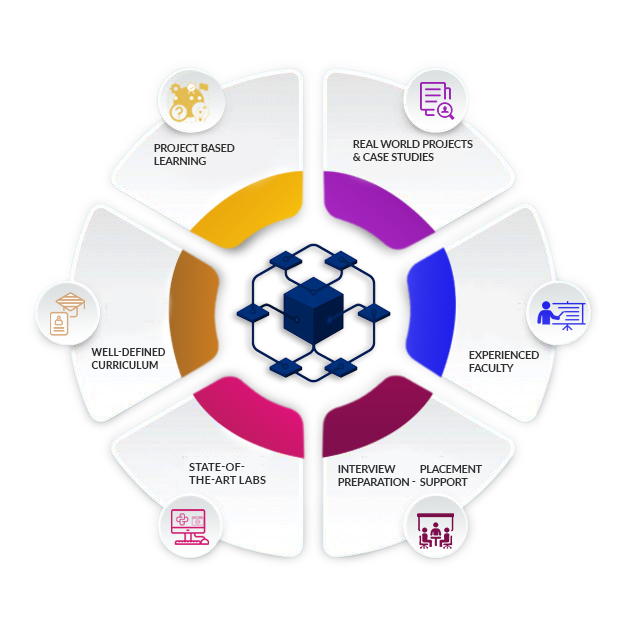
Trinity Technologies boasts a team of highly skilled instructors with extensive experience in the field of Data Science. These professionals bring real-world expertise into the classroom, helping students easily grasp complex concepts in data analysis, machine learning, and artificial intelligence. The faculty at Trinity Technologies are not just educators but mentors who guide students through each phase of their learning journey, ensuring they are fully prepared for certification exams, research pursuits, and real-world data challenges.
At Trinity Technologies, students benefit from state-of-the-art infrastructure equipped with the latest Data Science tools, software, and high-performance computing resources. The institute’s advanced labs allow learners to experiment with real datasets, implement machine learning algorithms, and build data-driven models. This immersive hands-on experience helps students understand how data science is applied across industries such as healthcare, finance, marketing, and technology.
The Data Science training program at Trinity Technologies offers a well-rounded curriculum that covers both foundational and advanced topics, carefully designed to match current industry demands. The course includes:
Introduction to Data Science and Data Wrangling: Learn the fundamentals of Data Science, including data collection, cleaning, transformation, and exploratory data analysis (EDA).
Statistics and Probability: Build a strong foundation in descriptive and inferential statistics, hypothesis testing, and probability theory to support data-driven decision-making.
Programming for Data Science (Python): Gain practical programming experience using Python and its key libraries such as pandas, NumPy, matplotlib, seaborn, and scikit-learn for data analysis and modeling.
SQL and Databases: Master the art of querying, managing, and analyzing large datasets stored in relational databases using SQL.
Machine Learning and Predictive Analytics: Explore supervised and unsupervised learning, regression, classification, clustering, and model evaluation techniques used in real-world applications.
Deep Learning Fundamentals: Get introduced to neural networks, TensorFlow, and Keras, understanding how deep learning models power modern AI systems.
Data Visualization and Communication: Develop the ability to visualize insights and communicate findings effectively through charts, dashboards, and storytelling with data.
Data Ethics and Governance: Learn best practices for managing data responsibly, maintaining privacy, ensuring transparency, and upholding ethical standards in data-driven work.
Capstone Projects: Work on real-world Data Science projects that integrate everything learned—data preprocessing, analysis, and predictive modeling—resulting in a strong professional portfolio.
Trinity Technologies emphasizes experiential learning through hands-on labs where students apply theoretical knowledge to real-world problems. Learners work with live datasets, train machine learning models, and deploy solutions, gaining the technical confidence to tackle professional data challenges effectively.
To ensure students are industry-ready, Trinity Technologies conducts regular assessments and mock tests. These evaluations measure both conceptual understanding and practical problem-solving abilities. Constructive feedback from instructors helps students continually refine their skills and prepare for global Data Science certifications.
Trinity Technologies is committed to helping students launch successful careers in Data Science. The institute offers personalized career guidance sessions covering resume building, portfolio presentation, and interview preparation. The dedicated placement team partners with top companies to provide internship and job opportunities, ensuring a seamless transition from training to professional employment.
A Data Science certification from a reputed institute like Trinity Technologies is a powerful endorsement of your ability to collect, analyze, and interpret complex data to drive intelligent decision-making. It not only validates your technical expertise but also enhances your credibility in an increasingly data-driven job market. Earning a Data Science certification opens doors to diverse and high-growth career opportunities across industries such as AI, finance, healthcare, and technology. Here’s why pursuing a Data Science certification is an important step toward building a successful and future-ready career:
Industry Recognition: A Data Science certification is globally recognized and showcases your expertise in one of the most in-demand disciplines across industries such as finance, healthcare, retail, and technology. It signals to employers that you possess the analytical, statistical, and programming skills essential for data-driven success.
Career Advancement: Whether you’re beginning your career or looking to transition into a high-growth domain, a Data Science certification can dramatically boost your career prospects, earning potential, and credibility as a data-savvy professional capable of deriving insights and driving business impact.
Gateway to Advanced Technologies: Data Science forms the foundation for cutting-edge fields like Machine Learning, Artificial Intelligence, and Big Data Analytics. Earning a certification equips you with the core knowledge and confidence to advance toward specialized roles and continuous learning in the evolving world of data.
By choosing Trinity Technologies for your Data Science training, you are investing in a program that perfectly blends expert instruction, hands-on practical experience, and dedicated career support. The Data Science certification course at Trinity Technologies equips you with the technical proficiency, analytical thinking, and industry-relevant expertise required to excel in today’s data-centric world — paving the way for a rewarding and future-ready career in Data Science.
What is Data Science Training?
Data Science training involves learning techniques and tools to collect, process, analyze, and model data to generate actionable insights, predictive models, and intelligent solutions for real-world problems.
Why Choose Data Science Training in Trivandrum?
Trivandrum is emerging as a tech and IT education hub, with institutes like Trinity Technologies offering industry-aligned Data Science programs. Students benefit from expert instructors, hands-on projects, and exposure to real-world datasets in a growing tech ecosystem.
Who Can Join the Data Science Program?
The program is suitable for beginners, graduates, and working professionals looking to switch to or advance in data-centric roles. A basic understanding of mathematics, statistics, and computer operations is helpful but not mandatory, as foundational modules are included.
What Topics are Covered in the Data Science Course?
The curriculum covers data preprocessing, Python and SQL programming, statistics, exploratory data analysis (EDA), machine learning, predictive modeling, deep learning basics, data visualization, business intelligence, and data ethics. Hands-on projects and capstones allow students to apply their learning.
How Long is the Data Science Course?
A comprehensive Data Science program usually lasts 3–6 months, depending on the depth of modules, with a mix of foundational topics, advanced techniques, and project-based learning.
What Job Roles Can I Pursue After Completing the Course?
Graduates can pursue roles such as Data Scientist, Machine Learning Engineer, Data Analyst, AI Specialist, and Business Intelligence Analyst, across sectors including finance, healthcare, technology, and e-commerce.
What’s the Difference Between Data Analytics and Data Science?
Data Analytics focuses on analyzing past data to derive insights for decision-making. Data Science is broader—it includes analytics but also predictive modeling, machine learning, and building AI-driven solutions. Trinity’s program covers both to prepare students for diverse roles.
Are There Hands-On Projects and a Capstone?
Yes, the course includes multiple hands-on assignments and a capstone project where students apply end-to-end data science techniques on real-world datasets, building a portfolio to showcase their skills.
Do You Offer Placement Assistance?
Trinity Technologies provides career guidance, resume and portfolio support, interview preparation, and access to industry networks to help students secure internships and job opportunities after completing the course.
What Programming Languages and Tools Will I Learn?
Students learn Python, SQL, and key libraries such as pandas, NumPy, matplotlib, seaborn, and scikit-learn. Depending on the batch, introductions to TensorFlow or Keras for deep learning may also be included.
Are Online Classes Available?
Yes, Trinity Technologies offers flexible options including live online sessions, recorded lectures for revision, and on-campus classes for local students.
Can Beginners Join With No Coding Experience?
Absolutely. The program includes foundational modules to introduce programming, statistics, and data analysis skills. Motivated beginners can gradually build up their expertise with guided practice and assignments.
Will I Receive a Certificate Upon Completion?
Yes, students receive a Data Science certification from Trinity Technologies, highlighting the skills acquired and projects completed during the program.
Trinity Technologies
Radheyam Tower
Gandhari Amman Kovil Road
Opp. Rajakumari Jewelry, Pulimood
Trivandrum, Kerala, 695001
Phone Numbers:
Email:
Monday - Saturday: 7:00 AM - 8:00 PM
Sunday: Closed
Batch Timings Available:
Morning | Afternoon | Evening